


Point Cloud Segmentation and BIM Conversion Services
This case study shows how Timspark delivered custom point cloud segmentation and point cloud-to-BIM conversion services for an AEC client. Using supervised machine learning, 3D point cloud processing, and Revit-compatible conversion logic, the team transformed LiDAR point clouds into BIM-ready outputs while reducing manual modeling effort and accelerating delivery.
*This was a custom workflow built and implemented for a client.
Timspark provides engineering services to design and deliver similar LiDAR to BIM and Scan-to-BIM workflows, rather than an off-the-shelf product.
industry
Architecture, Engineering & Construction (AEC)
type
AI & Deep Learning, Data Engineering, BIM Integration
country
Netherlands
duration:
January – October 2024
Highlights
- Supervised ML pipeline for point cloud segmentation and point cloud-to-BIM conversion
- Custom class-based detection of structural elements such as walls, doors, windows, and floors
- Revit-compatible conversion workflow with validation before model generation
- Approximate 0.85 mIoU overall, with performance varying by class
- Approximate 5-minute pipeline runtime on rented Azure GPUs / modern GPUs
- BIM-ready outputs for Revit, AutoCAD, and IFC-based workflows
Challenge

Timspark engineers were engaged to help automate the bottleneck in the workflow between raw point cloud data and BIM-ready deliverables.
The client needed a more efficient way to segment point clouds and convert them into structured outputs compatible with Revit-based workflows.
The main challenge was not only identifying building elements within large point cloud datasets, but doing so in a way that supported reliable downstream conversion into architectural models. The class structure depended on the client’s requirements, and the system needed to handle project-specific output categories while maintaining practical accuracy for real-world use.
To meet these needs, the team worked with supervised machine learning trained on client-labeled point cloud data, using chunk-based processing and validation steps before conversion into the final model.

Solution & functionality
Timspark designed and implemented a custom point cloud segmentation and BIM conversion workflow using Python, TensorFlow, PyTorch, PCL, and Pointcept.
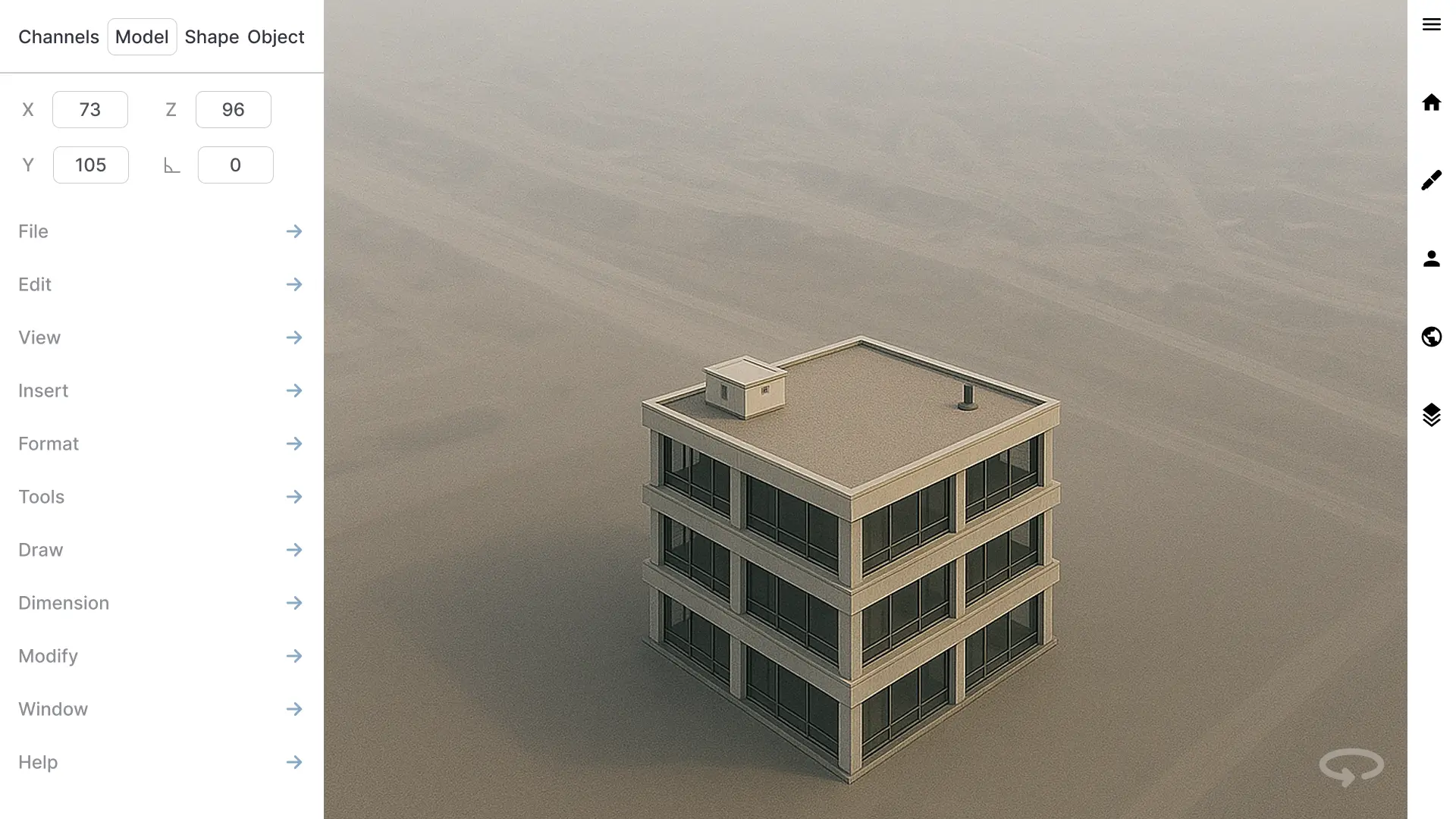
The workflow processed point cloud data in chunks, predicted classes for each point, validated the segmentation output, and then converted the segmented data into Revit-compatible structures.
The implementation was tailored to the client’s requirements:
- output classes were defined by the project scope,
- the taxonomy could be expanded for more complex environments,
- and the conversion stage was built to support BIM-ready outputs rather than generic visualization only.
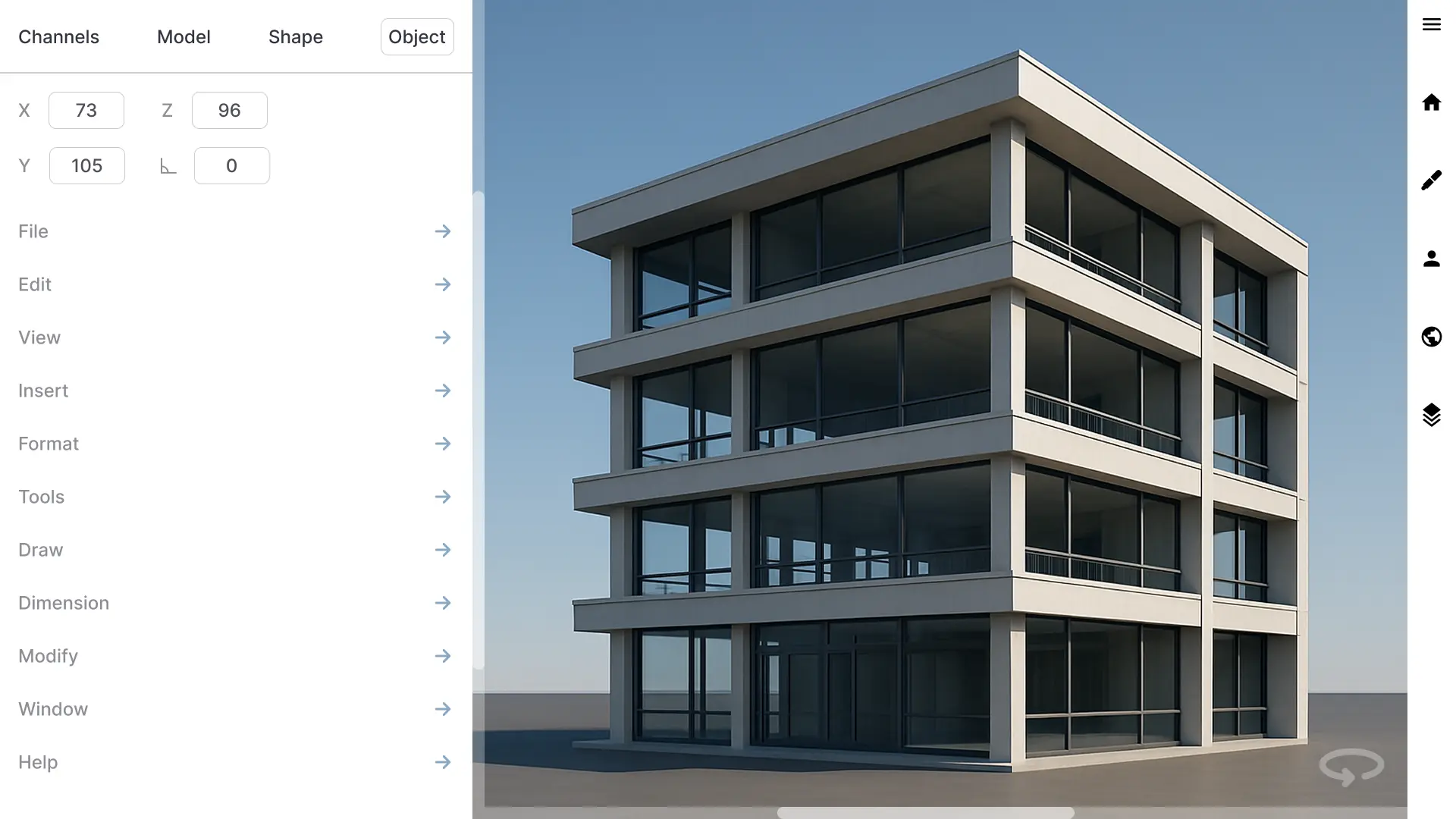
This custom workflow was designed to identify structural components such as walls, doors, windows, and floors and convert them into usable architectural outputs with greater speed and consistency than a fully manual process.
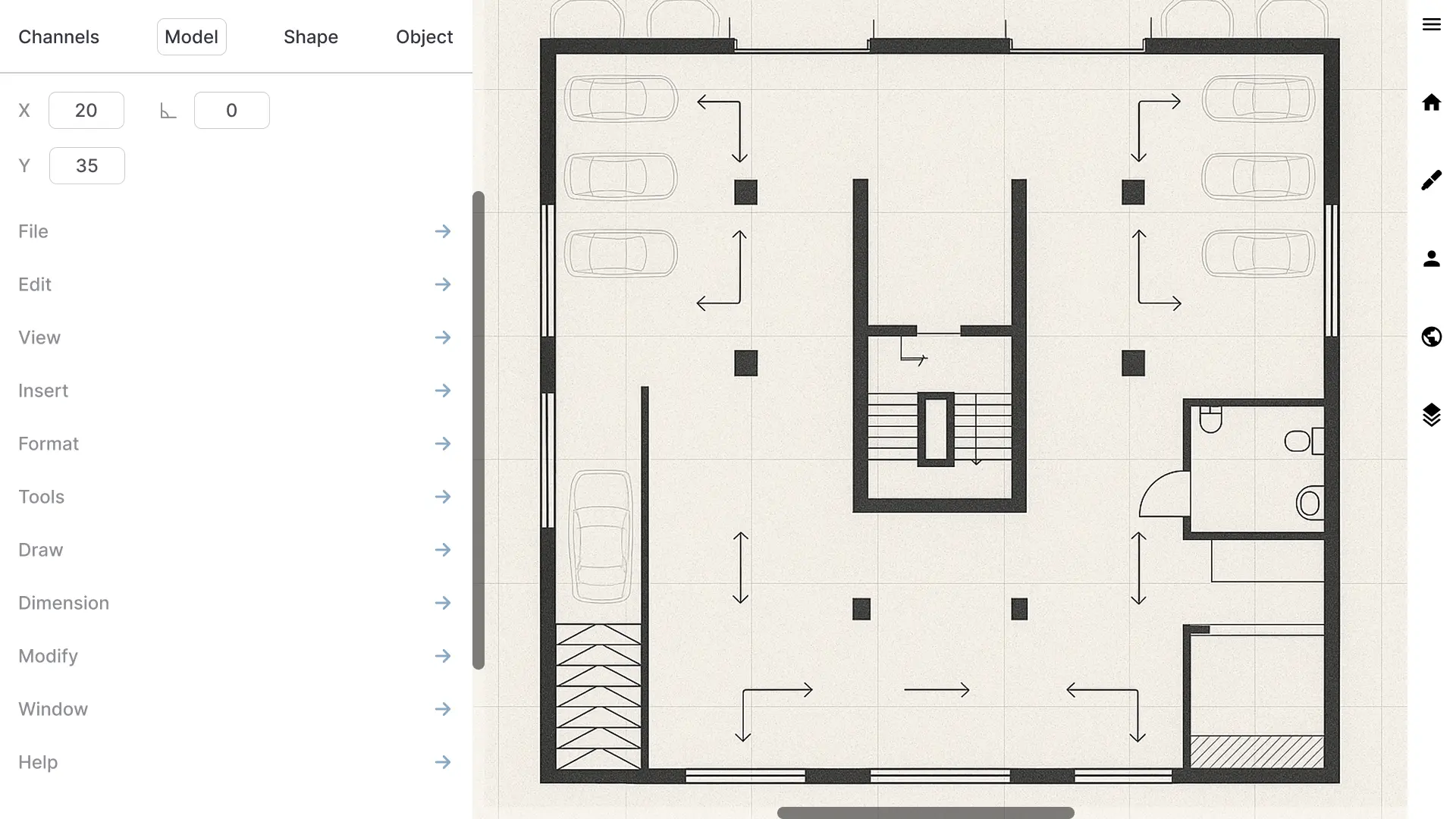
The solution also included a conversion layer from segmented point cloud data to Revit-compatible outputs, which became one of the most reusable parts of the implementation for similar use cases.
Looking for an engineering team to build a similar workflow?
How the workflow worked
This architecture made the pipeline practical for real delivery scenarios and easier to adapt for related Scan-to-BIM projects.
Point cloud data was prepared for processing regardless of the original source format, as long as the spatial data itself was available.
Large point clouds were split into manageable chunks for supervised model inference.
The model predicted classes for individual points based on the client-defined taxonomy.
Segmentation results were validated before moving into the model-generation stage.
Classified point cloud data was converted into BIM-oriented outputs aligned with the client’s workflow.
Backend:
Python
TensorFlow
PyTorch
Cloud platforms:
AWS/Azure
Tools:
Point Cloud Processing: OpenCV, PCL (Point Cloud Library)
3D Deep Learning Frameworks: Pointcept
3D Scanning: LiDAR technology
BIM Integration: AutoCAD, Revit, BIM 360
Depending on project requirements, the output can also be delivered in IFC file format for use across different BIM platforms.
Results and business value
The custom workflow improved both speed and delivery efficiency for point cloud segmentation and BIM conversion.
Using client-labeled training data and project-specific class prediction, the model achieved approximately 0.85 mIoU overall, with accuracy varying across classes depending on object complexity.
The pipeline also demonstrated practical runtime performance, completing inference and conversion in approximately 5 minutes on rented Azure GPUs / modern GPU environments, depending on the dataset and setup.
This helped establish a more scalable path from LiDAR scans to BIM-ready outputs and reduced the amount of fully manual work required in the modeling process.
Faster turnaround from point cloud data to BIM-ready outputs
Reduced manual effort in identifying and modeling structural elements
Project-specific class taxonomy aligned with real delivery requirements
Reusable conversion logic for similar LiDAR-to-BIM and Scan-to-BIM projects
More scalable processing for teams handling large point cloud volumes
Found this useful? Share it with your network
Related case studies

Get in touch with us
Book a call or fill out the form below and we’ll get back to you once we’ve processed your request.
What happens next?
An expert contacts you after thoroughly reviewing your requirements.
If necessary, we provide you with a Non-Disclosure Agreement (NDA) and initiate the Discovery phase, ensuring maximum confidentiality and alignment on project objectives.
We provide a project proposal, including estimates, scope analysis, CVs, and more.
We're here to help!

Relationship Manager

Marketing Lead