


Project Discovery Phase: Key Expectations and Pitfalls to Avoid
Updated: January 16, 2025
The discovery phase is a foundational period where clients and development teams align on a shared vision. In the Software Development Life Cycle (SDLC), this stage is less about “dreaming” and more about mitigating risk. By tackling complex requirements early, you ensure that the final product doesn’t just function—it succeeds in the market.
In this guide, we’ll explore the significance of the discovery phase and provide actionable strategies to manage unrealistic expectations before they impact your bottom line.
What is the project discovery phase?
The project discovery phase is the initial stage of software development focused on data gathering, business analysis, and technical feasibility. It is designed to define project goals, user needs, and technical constraints before any coding begins.
During this stage, your team conducts deep-market and user research to make data-driven decisions. Key focus areas include:
-
-
User Experience (UX) & Design Style
-
MVP Scope: Defining features for the Minimum Viable Product.
-
Tech Stack Selection: Identifying the best technology for scalability.
-
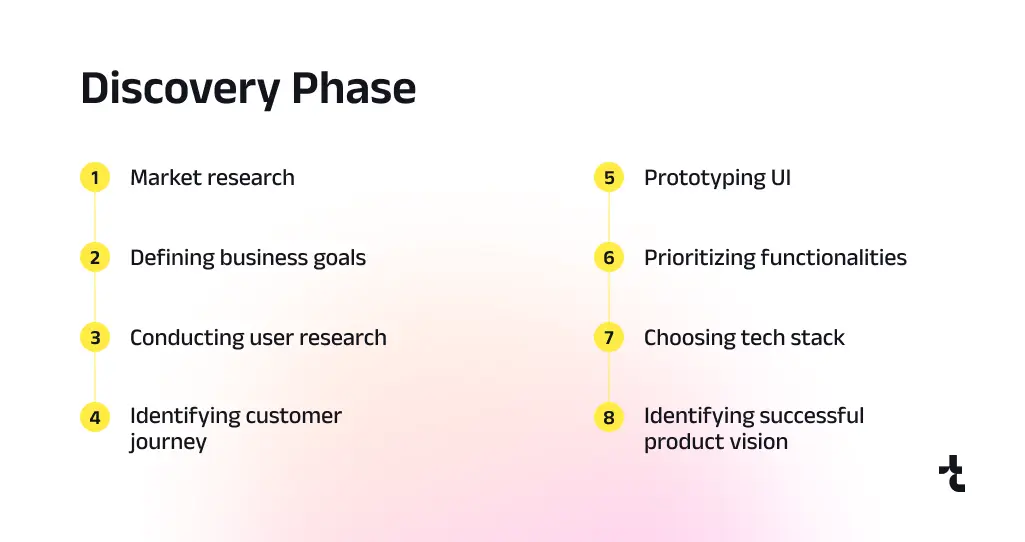
During the project discovery stage, you’ll gather all the important market and user research data you need to make good choices. You’ll decide on things like:
- Design style
- Features for the first version of the product
- Best technology to use for the product
In the end, you’ll usually have such discovery phase deliverables as a UI prototype, some documents, like a project roadmap, and a clear vision of what success looks like for your product.
Why is the discovery stage critical for success?
A structured project discovery serves three vital functions:
- Scope Control: It defines the project boundaries, preventing “scope creep” and keeping the budget on track.
- Stakeholder Alignment: It ensures that the development team and the business owners are speaking the same language.
- Technical Feasibility: It provides a reality check. The development team identifies what can realistically be built given the current technology and budget.
Ultimately, this phase merges your industry knowledge with the team’s technical expertise to create a blueprint for a feasible, high-quality product.
Seven unrealistic expectations that disrupt product development
Most project delays stem from mismatched visions or communication gaps. Addressing these seven common pitfalls during the discovery phase will keep your project on the path to success.
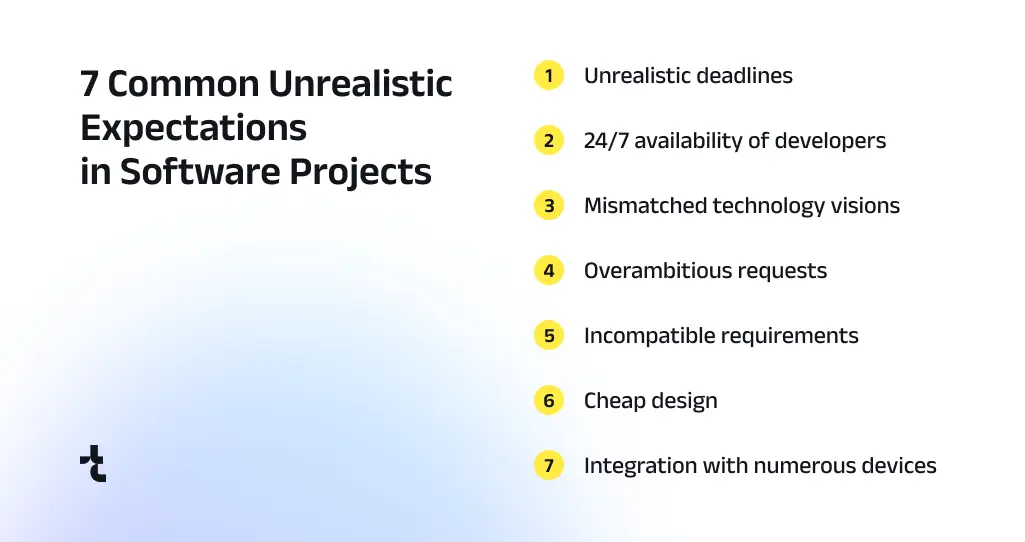
#1 Unrealistic deadlines
Impossible timelines often result from a lack of understanding of task complexity. A common myth is that adding more developers can shorten the timeline proportionally (the “9 women can’t make a baby in a month” principle). Complex systems require logical sequences that simply cannot be rushed.
# 2 24/7 availability of developers
Constant availability is a recipe for burnout and decreased code quality. global While teams can provide “follow-the-sun” support, it requires a specific budget and structured handovers. Clear communication about working hours is essential for the long-term health of a project.
#3 Mismatched technology visions
Choosing a tech stack because it is “trendy” is a common mistake. The discovery phase determines if a specific technology actually fits your product’s architecture. Consulting agencies often suggest “safe” popular stacks, but a true discovery partner looks for the most efficient tool for your specific problem.
#4 Overambitious requests
Many clients request AI development services without having the necessary data or algorithms. If there is a gap in the business logic—such as a medical system needing to match patients to treatments—the discovery phase is the time to bridge that gap with concrete data science.
#5 Incompatible requirements
Attempting to achieve high-end features (like global real-time video recognition) on a shoestring budget creates friction. During discovery, we help you prioritize. For example, instead of storing all video data “forever,” we can optimize storage costs based on how often you actually need to access that content.
#6 Design on a dime
Underestimating the UI/UX design phase is a critical error. The interface is the first point of contact for your users. Skimping here doesn’t just make the product “look bad”—it makes it hard to sell and difficult to use, directly impacting your ROI.
#7 Integration with numerous devices
Demanding that a product works on every smart device simultaneously increases complexity and costs exponentially. A smarter approach is to identify your primary user base. For example, during discovery, we may find that focusing on Apple and Samsung models covers 90% of your target audience, saving you months of development time.
How much does the discovery phase cost?
The cost of a project discovery phase typically ranges from 10% to 15% of the total project budget. While it may feel like an upfront expense, it is an investment in risk mitigation.
By identifying potential bottlenecks and architectural flaws early (a “Shift-Left” approach), you avoid the massive costs associated with rewriting code mid-development.
Set the stage for a realistic project delivery
The discovery phase is the “North Star” for your software project. By managing expectations and defining a clear roadmap now, you ensure a smoother, faster delivery later.
Every detail nailed down in this phase is a step closer to bringing your vision to life without the headache of unexpected costs or missed deadlines.
Feeling overwhelmed by the technical details?